EISPAC
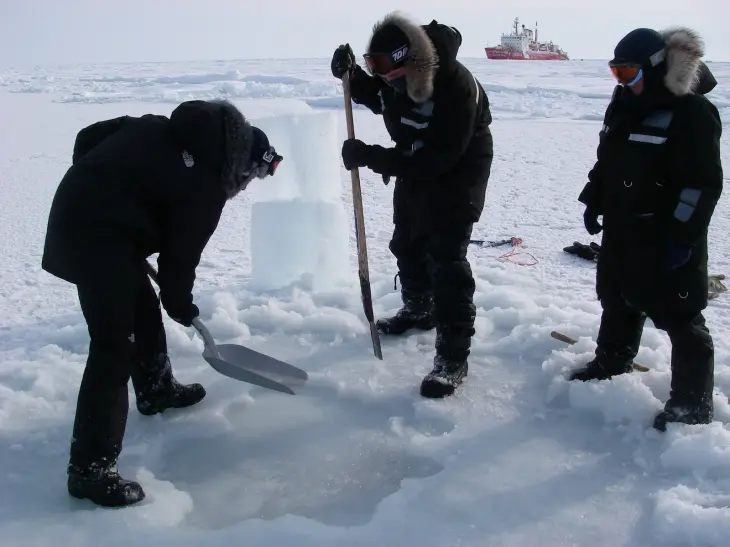
EISPAC Scientists in the field. One aim pf the project is to to determine the entry of key nutrients to the ice-system and to investigate the biogeochemistry of dissolved organic and inorganic Nitrogen during during ice melt and in coastal regions (Photo: NERC)
The Arctic is one of the regions undergoing the most rapid changes worldwide; among other things, global warming is causing massive melting of glaciers and sea ice. The EISPAC project is therefore investigating whether and how pollutants from sea ice, in combination with nutrients, influence the functioning of ecosystems.
The goal is to determine whether and how various pollutant loads affect organisms on and within sea ice, and whether this has implications for the lower levels of the food web, particularly regarding nutrient availability. The behavior and fate of pollutants and nutrients are therefore being monitored in water, ice, and air during field campaigns in the Arctic.
One case study, for example, focuses on the Lena Delta in northeastern Siberia. Additionally, experiments are being conducted in a sea ice chamber at the University of Norwich, which allows for the study of the behavior of pollutants and nutrients in water, sea ice, and air under controlled conditions.
The research helps predict the impacts of such changes using computational models. This concerns, for example, changes in the productivity of the Arctic Ocean, species distribution, and the food web.
EISPAC is part of the “Arctic in Transition” research program of the UK’s Natural Environment Research Council and the German Federal Ministry of Education and Research.
Learn more about the EISPAC project here.