
Ocean Gardens

Ocean Gardens adopts a scalable and modular approach to open-ocean seaweed aquafarming. This flexible cultivation concept provides natural input material for sustainable products that contribute to carbon dioxide removal while simultaneously benefiting marine ecosystems.
The reliance on land-based biomass for biofuels and bioplastics is unsustainable due to competition for arable land, freshwater, and fertilizers. Seaweed aquaculture presents a game-changing opportunity to decarbonize the transportation and chemical industries while enhancing marine biodiversity.
Goals and Tasks

Sargassum is a promising seaweed species for macroalgae cultivation.
Addressing climate change and protecting marine ecosystems require urgent and scalable solutions. The reliance on land-based biomass for biofuels and bioplastics is unsustainable due to competition for arable land, freshwater, and fertilizers. Seaweed aquaculture presents a game-changing opportunity to decarbonize the transportation and chemical industries while enhancing marine biodiversity.
The Ocean Gardens project pioneers offshore regenerative seaweed farming across European waters, demonstrating its feasibility, environmental benefits, and economic viability. This project focuses on cultivating diverse native seaweed species using innovative floating techniques in the open ocean. This approach provides a scalable and cost-effective alternative to traditional coastal line-based farming.
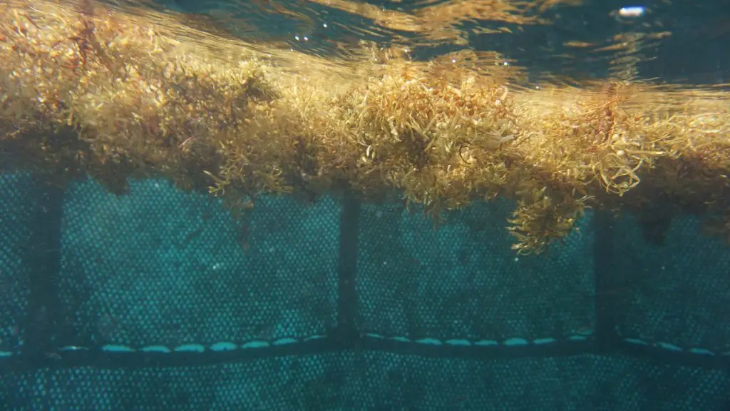
Sargassum growing in an aquaculture farm.
Gran Canaria, Spain, will serve as the primary demonstration site for these ocean gardens, with a permit under finalization for a 40,000 m2 modular farm. Environmental monitoring will integrate in-situ sensors, drones, and cameras to assess carbon sequestration, nutrient bioremediation, and biodiversity impacts, to increase scientific knowledge on the environmental benefits of regenerative aquafarming.
The project will explore expansion opportunities in Galicia and the Mediterranean, by studying water chemistry, native species, regulatory frameworks, and biomass market applications.
Funding
This project is funded by the European Maritime, Fisheries and Aquaculture Fund under the EMFAF-2025-PIA-FLAGSHIP Call [Regional flagships projects supporting sustainable blue economy in EU sea basins - Smart Specialisation and Regenerative Ocean Farming and Algae Innovation]
Duration
Sept. 2025 - Sept. 2028
Partners
Algae farms for climate protection
AWI-Sustainable Marine Bioeconomy
MacroCarbon
Canarian Science and Technology Park Foundation